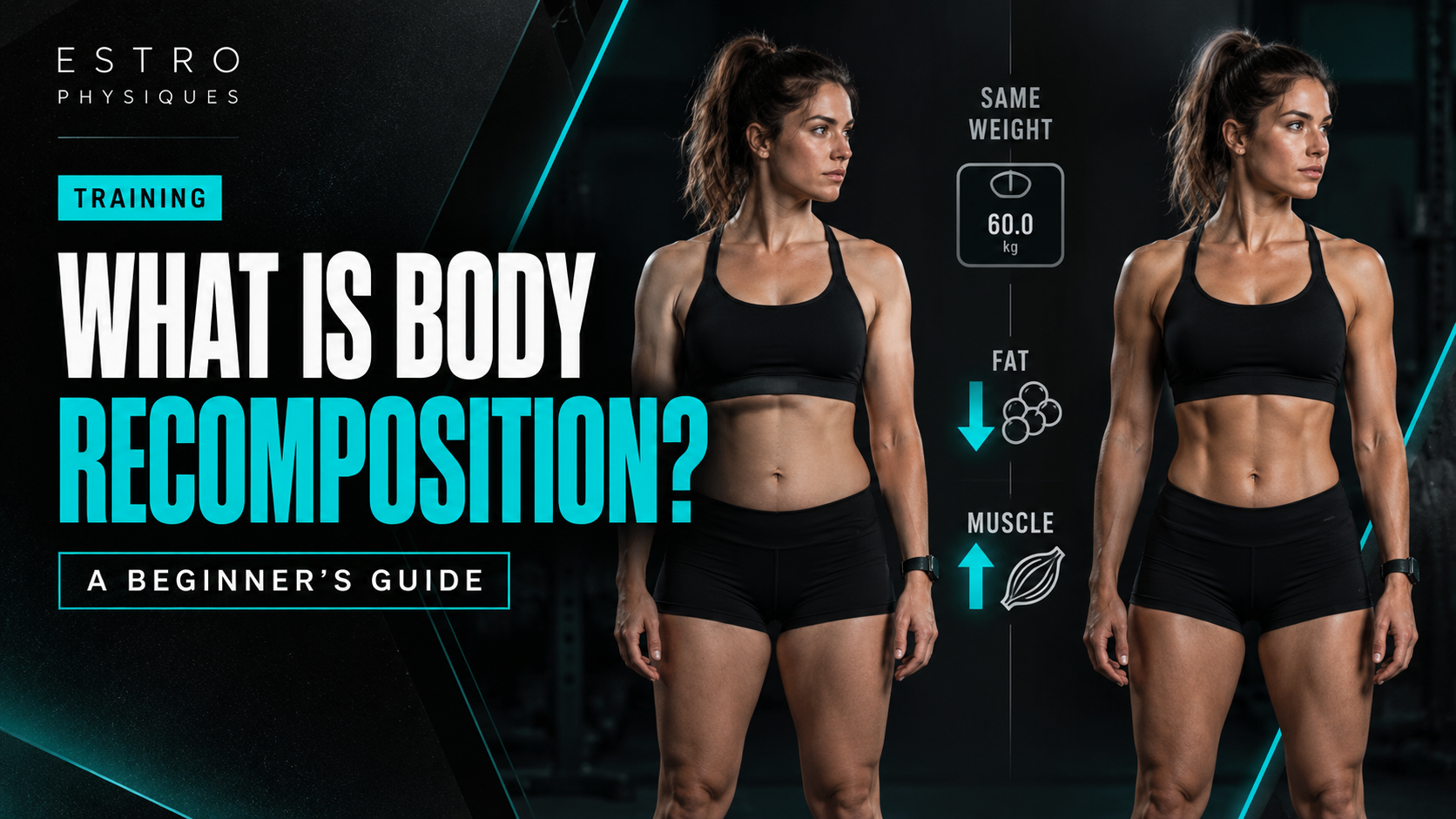
What Is Body Recomposition? A Beginner’s Guide for Women
If you’ve ever wanted to lose fat and build muscle at the same time, you’ve already been describing body recomposition, even if you didn’t have a name for it. It’s one of the most misunderstood goals in fitness, mostly because it doesn’t show up neatly on the scales. Your weight can barely move while your body changes shape completely.
Here’s the thing. “Recomp” is what most of the women I coach are actually chasing. They don’t want to just be lighter. They want to look strong, feel capable, and love how their clothes fit. So let me walk you through what body recomposition really is, whether it’s realistic for you, and how to train and eat to make it happen.
Body recomposition, defined
Body recomposition is the process of reducing body fat while building (or at least keeping) lean muscle. Instead of chasing a lower number on the scales, you’re changing the ratio of fat to muscle on your frame.
This is exactly why the scales can be so misleading. A kilo of muscle takes up far less room than a kilo of fat, so you can stay the same weight, or even get slightly heavier, while looking leaner and more defined. Progress photos, tape measurements and how your clothes fit will always tell you more than your weight does.
Can you really build muscle and lose fat at once?
For years the standard advice was that you had to pick one. Do a “bulk” to build muscle, then a “cut” to lose fat. And it’s true that if you’re already lean and experienced, doing both at once is tricky.
But for a lot of women, doing both together is very achievable. You’re most likely to pull it off if you are:
- New to lifting. Beginners make quick strength and muscle gains, often called “newbie gains.”
- Coming back after a break. Muscle you’ve built before returns faster thanks to muscle memory.
- Carrying a bit more body fat. More stored energy makes it easier to fuel muscle growth while eating slightly less.
- Not eating much protein right now. Fixing this one thing alone can transform your results.
A large review of exercise training in postmenopausal women, indexed on PubMed, found that resistance training reliably builds muscle while combined training helps shed fat. In other words, body composition genuinely shifts in both directions when you train the right way (Khalafi et al., 2023).
The three pillars of recomp
1. Lift weights, and keep progressing
Muscle only grows when you give it a reason to. Resistance training, whether that’s dumbbells, barbells, machines or bands, is the non-negotiable driver of recomposition. The key word is progressing. Over the weeks and months you gradually add weight, reps or sets so your muscles keep adapting.
Two to four strength sessions a week is a realistic, effective place to start for most women.
2. Eat enough protein
Protein is the raw material your body uses to build and repair muscle. It also keeps you full, which makes it so much easier to eat slightly fewer kilojoules without feeling deprived. Most women chasing recomp do well aiming for roughly 1.6 to 2.2 grams of protein per kilo of body weight per day, spread across their meals.
3. Eat near maintenance (or a small deficit)
Recomp works best when you’re eating around maintenance or in a small deficit, not slashing your food. Aggressive dieting sacrifices the very muscle you’re trying to build. Slow and steady genuinely wins here.
How long does body recomposition take?
Recomp is a marathon, not a sprint. Because you’re not chasing rapid weight loss, changes can feel slow week to week, but they tend to be more permanent. Most women start noticing real change in the mirror around the 8 to 12 week mark, with a proper transformation over 6 to 12 months of consistent training and eating.
Patience is the price of admission. The women who get the best results are almost always the ones who stopped starting over every few weeks.
Is recomp right for you?
Body recomposition is ideal if you want to change your shape rather than just your weight, if you’re relatively new to lifting, or if you’ve been stuck in a cycle of crash diets that left you smaller but not stronger. If you’ve got a large amount of fat to lose, a deficit-focused phase might come first, but strength training should be part of the plan either way.
Frequently asked questions
Will I get bulky doing body recomposition? No. Building noticeable muscle is slow and hard for women, largely because of lower testosterone. Recomp makes you look toned and defined, not bulky.
Do I need to count kilojoules to recomp? Not necessarily, but tracking your protein and staying roughly aware of your intake makes results far more predictable, especially early on.
Can I recomp with just bodyweight exercises? You can start there, but you’ll progress faster once you add some external weight and increase it over time.
Ready to change your shape, not just your weight?
Body recomposition is exactly what our online coaching at Estro Physiques is built around. Smart strength training, enough protein, and a plan you’ll actually stick to. If you’re in Townsville or training from anywhere, we’ll help you build muscle and lose fat without the crash-diet cycle.
References (via PubMed): Khalafi M, et al. The effects of exercise training on body composition in postmenopausal women: a systematic review and meta-analysis. Front Endocrinol. 2023. DOI.