How Long Does It Take to Build Muscle?
It’s the question every woman asks when she starts lifting. How long until I actually see results? I’ll be honest with you. Building muscle is slower than social media would have you believe, but the changes are real, they last, and they often show up sooner than you’d expect once you know where to look.
Setting realistic expectations is one of the kindest things I do for my clients, because it’s usually unrealistic timelines, not a lack of progress, that make women quit. So here’s what building muscle really looks like.
The realistic timeline
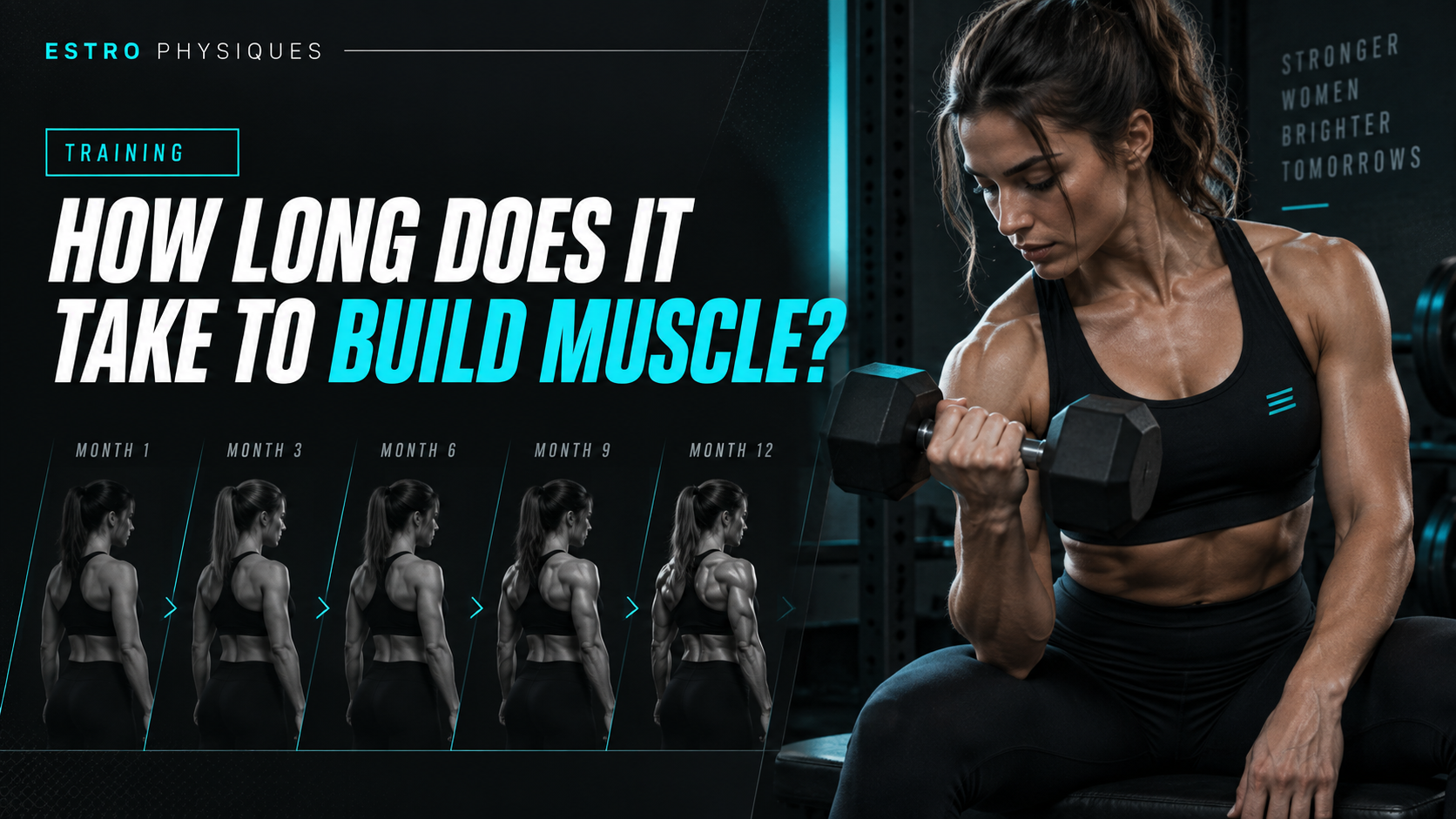
Muscle growth happens gradually, but here’s roughly what to expect:
- Weeks 1 to 4: You won’t see much new muscle yet, but you’ll feel stronger fast. Those early strength gains come mostly from your nervous system getting better at recruiting muscle, and it’s a real, motivating win.
- Weeks 4 to 8: Your muscles start to feel firmer and more worked. You may notice better tone and the first subtle shape changes, especially if you’re new to lifting.
- Weeks 8 to 12: Visible changes start to show. More definition, clothes fitting differently, noticeably heavier lifts. This is where consistency starts paying off in the mirror.
- 3 to 6 months: Clear, obvious changes in shape and strength that other people start to notice.
- 6 to 12 months and beyond: A significant transformation is very achievable with consistent training and nutrition.
As a rough guide, a woman training well might build somewhere around 0.5 to 1 kg of muscle in her first few months, then more slowly after that. It doesn’t sound like much on paper, but a kilo or two of muscle changes your shape dramatically.
What affects how fast you build muscle?
A few things influence your rate of progress:
- Training experience. Beginners enjoy quick “newbie gains.” The more advanced you are, the slower and harder muscle comes.
- Consistency. By far the biggest lever. Someone who trains steadily for a year will out-build someone who trains hard for three weeks then stops, every single time.
- Nutrition. You need enough protein (around 1.6 to 2.2 g/kg body weight) and enough overall energy to support growth.
- Progressive overload. Muscles only grow when you keep challenging them, gradually adding weight, reps or sets.
- Recovery. Muscle is built during rest, not just training. Sleep and rest days matter enormously.
- Genetics and age. These affect your rate, but everyone can build meaningful muscle, including later in life. A 2026 analysis indexed on PubMed found that even postmenopausal women build lean mass and strength with resistance training, helped further by enough protein and, in some cases, creatine (Naddafha et al., 2026).
Why the scales aren’t the story
Because muscle is denser than fat, and you’re often losing a little fat while gaining muscle, your body changes shape long before the scales catch up. Judge your progress by the mirror, tape measurements, photos, how your clothes fit, and, most importantly, the weight on the bar going up. Strength progress is a reliable early sign that muscle is on the way.
How to build muscle faster (the right way)
There are no shortcuts, but you can absolutely optimise:
- Train each muscle 2 to 3 times a week with challenging weights.
- Apply progressive overload, aiming to do a little more over time.
- Prioritise the big lifts like squats, deadlifts, presses, rows and hip thrusts.
- Eat enough protein, spread across your meals.
- Eat enough total energy. You can’t build much muscle in a large deficit, so eat around maintenance or a slight surplus if building is the priority.
- Sleep 7 to 9 hours to support recovery and growth.
- Be relentlessly consistent. This is the real “secret.”
Manage your expectations and stay the course
The women who succeed aren’t the ones with special genetics, they’re the ones who kept going when progress felt slow. Muscle is built in months and years, not days. Trust the process, track the right things, and let consistency compound. Twelve months from now, you’ll be so glad you started today rather than waiting for a faster method that doesn’t exist.
Frequently asked questions
How long does it take to see muscle definition? Most women notice early tone and firmness around 4 to 8 weeks, with clearer, visible definition by 8 to 12 weeks of consistent training and good nutrition.
How much muscle can a woman build in a month? Realistically around a few hundred grams in a good month for a beginner, slowing over time. It sounds small, but it adds up to a big change in shape over the months.
Can I build muscle after menopause? Yes. Research shows postmenopausal women build muscle and strength with resistance training. It just takes consistency and enough protein.
Do I need supplements to build muscle? No. Whole-food protein and consistent training do the job. Some evidence supports creatine as a helpful extra, but it’s optional, not essential.
Build muscle with a plan that works
Building muscle takes time, but with the right program, nutrition and accountability, that time is far better spent. I help women build strength and shape with realistic expectations and expert guidance, in Townsville and online across Australia. If you’re ready to start properly, we’d love to help.
References (via PubMed): Naddafha S, et al. Creatine monohydrate for lean mass, strength, and bone density in postmenopausal women: a systematic review and meta-analysis. J Int Soc Sports Nutr. 2026. DOI.