Do You Need Cardio to Lose Fat?
Ask most people how to lose fat and they’ll say “do more cardio.” Hours on the treadmill, sweaty spin classes, endless running. It’s the default answer. But is cardio actually necessary to lose fat, or is it just the thing everyone assumes you have to do?
Let me be straight with you. No, you don’t strictly need cardio to lose fat, but it can help. What you genuinely need is an energy deficit. So let’s unpack what that means and where cardio fits in, so you can stop doing exercise you hate and start getting results.
Fat loss is driven by energy balance
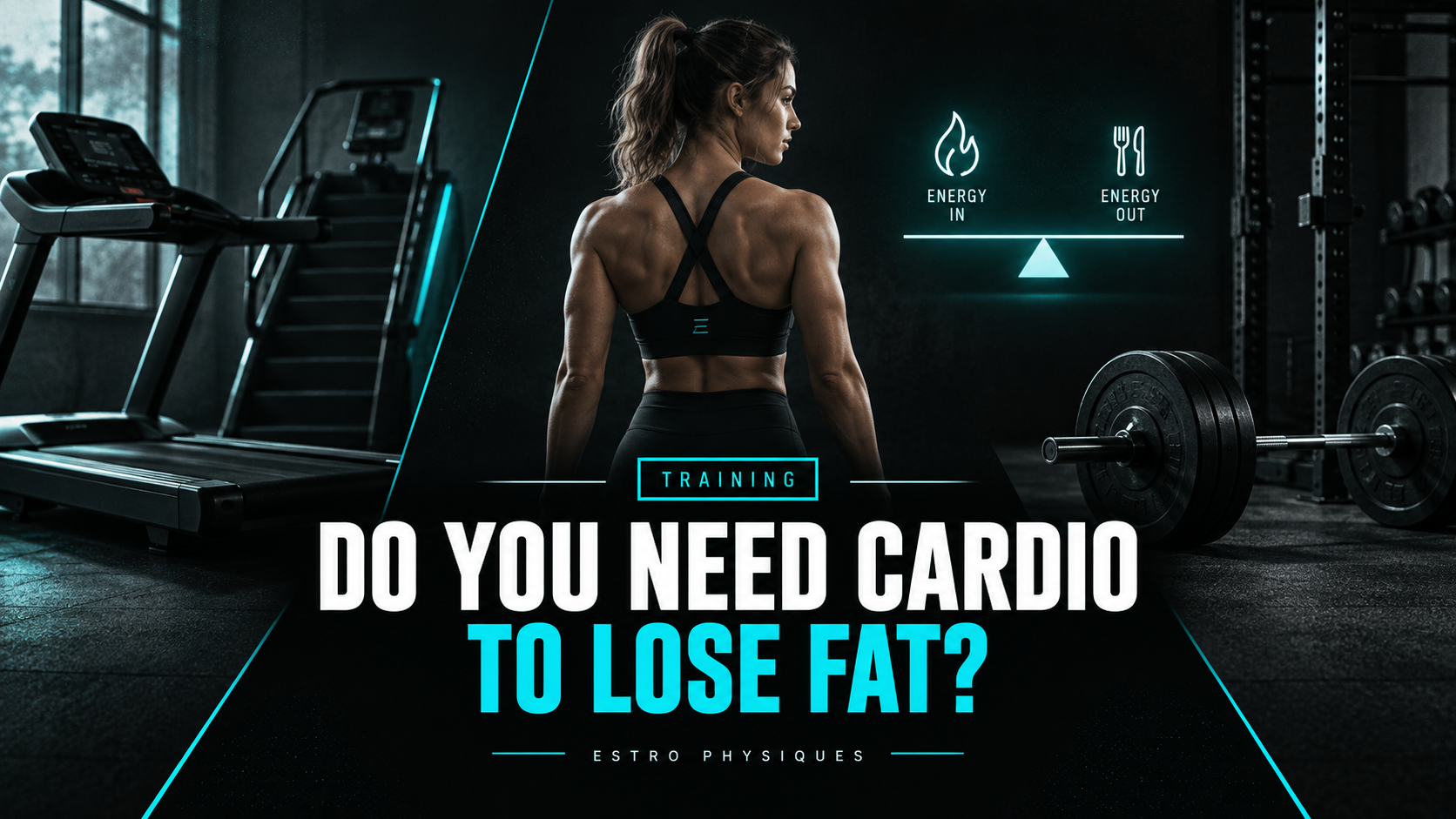
Fat loss comes down to one principle. Your body has to use more energy than it takes in over time. That’s your energy deficit. When you consistently eat fewer calories than you burn, your body dips into fat stores to make up the difference.
There are two levers you can pull to create that deficit:
- Eat less (reduce energy in, through nutrition)
- Move more (increase energy out, through activity, including cardio)
Cardio is simply one way to burn extra energy. It’s a tool, not a magic fat-melting requirement. And here’s what most people underestimate. Nutrition is the more powerful lever. It’s far easier to skip a 500-calorie snack than to burn it off with 45 minutes of jogging.
What the research says about cardio vs weights
When it comes to changing your body, the type of training matters. A 2025 systematic review and meta-analysis indexed on PubMed compared resistance training, aerobic training and a combination of both. It found that aerobic and combined training were more effective than weights alone for reducing absolute fat mass, but resistance training was best for holding onto the lean muscle you don’t want to lose (Lafontant et al., 2025).
A separate meta-analysis in postmenopausal women reached a similar conclusion. Aerobic training helps most with fat loss, resistance training builds muscle, and combining them delivers the best overall body composition (Khalafi et al., 2023).
So if you want to look lean and strong, here’s the takeaway. Lift weights to keep your muscle, use nutrition to drive the deficit, and add cardio as a helpful bonus, not the main event.
Why you shouldn’t rely on cardio alone
If you only do cardio in a big deficit, you risk losing muscle along with fat. That leaves you lighter but softer, the “skinny fat” look a lot of women are actually trying to avoid. Muscle is what gives you shape, definition and a healthy metabolism, so protecting it should be a priority.
That’s exactly why resistance training belongs at the core of any fat-loss plan, with cardio playing a supporting role.
How much cardio should you actually do?
There’s no magic number, but a sensible approach for most women looks like this:
- Prioritise strength training, 2 to 4 sessions a week
- Add 2 to 4 cardio sessions if you enjoy it and it helps your deficit
- Boost your daily steps. Aiming for 8,000 to 10,000 a day is a hugely underrated, low-stress way to burn energy without formal cardio
Both steady-state cardio (walking, cycling, swimming) and higher-intensity intervals work. The best type is the one you’ll actually do consistently. In Townsville’s warmth, an early-morning walk along The Strand counts every bit as much as a cardio machine at the gym.
The bottom line on cardio
Cardio is great for fat loss, heart health, fitness and mood, but it isn’t mandatory, and it should never replace strength training or sensible eating. If you love it, do it. If you hate it, you can still get lean by nailing your nutrition, lifting weights and walking more.
Frequently asked questions
Can I lose fat without any cardio? Yes. Fat loss is driven by an energy deficit, which you can create through nutrition and strength training alone. Cardio just adds to the energy you burn.
Is cardio or weights better for fat loss? Cardio tends to burn more fat mass in the moment, but weights preserve muscle. Combining both with good nutrition gives the best body composition.
How much cardio should a woman do to lose weight? Start with strength training plus a daily step goal (around 8,000 to 10,000 steps), and add 2 to 4 cardio sessions if you enjoy them. Nutrition still does the heavy lifting.
Is walking enough cardio? For many women, yes. Daily walking is a fantastic, joint-friendly way to increase energy expenditure and support fat loss.
Train smarter, not just harder
You don’t need to punish yourself with cardio to lose fat. I build fat-loss plans around strength, smart nutrition and realistic activity, so you keep your muscle and actually enjoy the process. If you’re in Townsville or coaching online, we’d love to help you lean out the sustainable way.
References (via PubMed): Lafontant K, et al. Comparison of concurrent, resistance, or aerobic training on body fat loss: a systematic review and meta-analysis. J Int Soc Sports Nutr. 2025. DOI. · Khalafi M, et al. The effects of exercise training on body composition in postmenopausal women. Front Endocrinol. 2023. DOI.