Flexible Dieting vs Meal Plans: Which Is Better for Women?
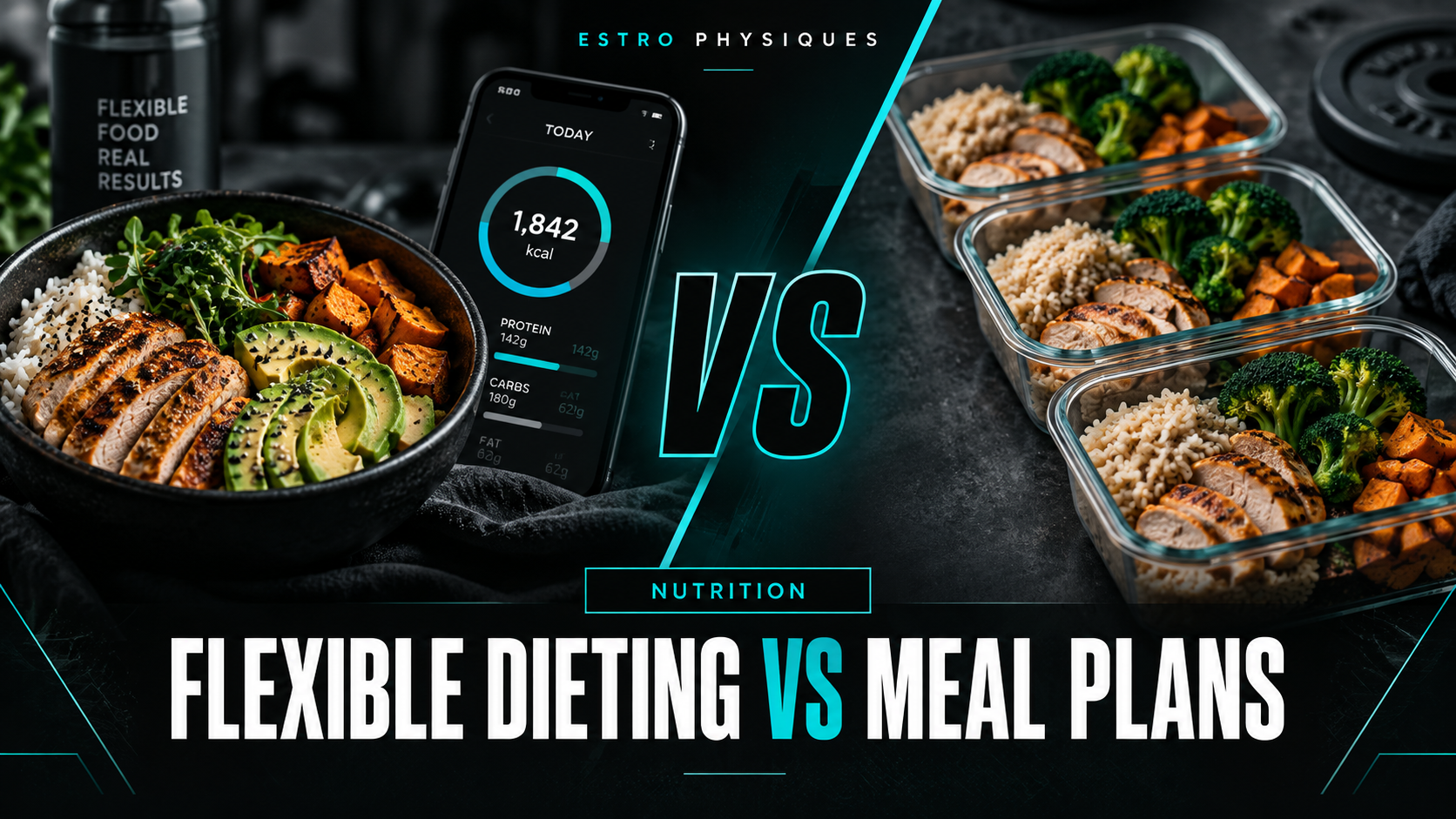
When you decide to get serious about nutrition, you’ll quickly hit a fork in the road. Follow a set meal plan that tells you exactly what to eat, or use flexible dieting where you hit targets like protein and calories with foods you choose. Both can work, but they suit very different people and personalities.
I mostly coach flexible dieting because it tends to last, but there’s no single “right” answer. So let me give you an honest comparison, and you can pick the approach that fits your life.
What is a meal plan?
A meal plan spells out exactly what to eat and when. Specific meals, specific foods, specific portions. You follow it as written. Breakfast is X, lunch is Y, and so on.
The pros:
- Zero guesswork. You know precisely what to eat, which is reassuring when you’re starting out.
- Simple to follow. No maths, no tracking, just eat what’s on the page.
- Structured. Great if you love routine and clear rules.
The cons:
- Rigid and repetitive. Eating the same meals gets boring fast, which kills adherence.
- Hard in real life. Dinners out, events, travel and family meals don’t fit neatly into a fixed plan.
- Teaches you very little. You follow instructions without learning why, so when the plan ends you’re back where you started.
- All-or-nothing. Deviate once and it’s easy to feel like you’ve “failed” and give up.
What is flexible dieting?
Flexible dieting (sometimes called “IIFYM,” or if it fits your macros) means hitting nutrition targets, typically a protein goal and an energy (calorie) target, using whatever foods you like, as long as they fit. You build meals from a wide range of options and can even work in treats, provided you stay within your numbers.
The pros:
- Freedom and variety. Eat foods you enjoy and adapt to any situation, whether that’s restaurants, birthdays or travel.
- Sustainable long-term. Because nothing is banned, it’s far easier to stick with.
- Teaches you skills. You learn about portions, protein and balance, knowledge you keep forever.
- Fits real life. Social events and family dinners become manageable, not diet-ending.
- No guilt. A slice of cake isn’t “cheating,” it’s just part of your day’s food.
The cons:
- It requires tracking. You’ll need to log food, at least while you learn, usually through an app.
- There’s a learning curve. It takes a few weeks to get comfortable with targets and tracking.
- Freedom can be misused. “Flexible” doesn’t mean “anything goes.” You still need mostly nutritious food for health, energy and fullness.
Which one is right for you?
A meal plan might suit you if you’re brand new and feel overwhelmed, you genuinely like routine and eating similar foods, you want zero decisions to make, or you have a short-term, specific goal.
Flexible dieting might suit you if you want a lasting approach rather than another temporary diet, you have a busy social life or travel often, you want to learn how nutrition actually works, you dislike restriction, or you’ve done rigid diets before and always rebounded.
The best of both worlds
You don’t have to pick one forever. A really effective approach for a lot of women is to start with more structure, even a loose meal template, while you build habits and confidence, then gradually shift toward flexible dieting as you learn. You get the early simplicity of a plan and the long-term sustainability of flexibility.
The most important factor isn’t which camp you’re in, it’s consistency. The best nutrition approach is simply the one you’ll actually follow, week after week, without dread. For most women, that’s flexibility with enough structure to stay on track.
Frequently asked questions
Is flexible dieting better than a meal plan? For long-term, sustainable results, flexible dieting usually wins because it fits real life and teaches lasting skills. But a meal plan can be a helpful starting point if you feel overwhelmed.
Do I have to count macros to diet flexibly? While you’re learning, tracking (at least protein and total intake) makes flexible dieting far more effective. Over time, many women develop a good enough eye to relax the tracking.
Can I still eat treats on a flexible diet? Yes, that’s the point. As long as they fit within your targets and you’re getting enough nutritious food overall, treats can be part of the plan.
Which is better for building muscle? Both can work, as long as you eat enough protein and energy. Flexible dieting just makes it easier to sustain the consistency that building muscle requires.
Find the approach that lasts
The best diet is the one you can stick to, and for most women that means flexibility with enough structure to feel supported. I help you build a nutrition approach around your real life, so results become a byproduct of habits you can actually keep. Whether you’re in Townsville or coaching online, we’d love to help you find your fit.