How Much Protein Should Women Eat? A Practical Guide
If there’s one nutrition change that transforms results for the women I coach, it’s eating more protein. It builds and protects muscle, keeps you full, helps you recover, and makes fat loss so much easier. Yet most women eat far less than they need, usually because they’ve been told protein is a “bodybuilder” thing.
It isn’t. So let’s sort out how much protein you actually need, why it matters, and how to hit your target without living on chicken and rice.
The short answer
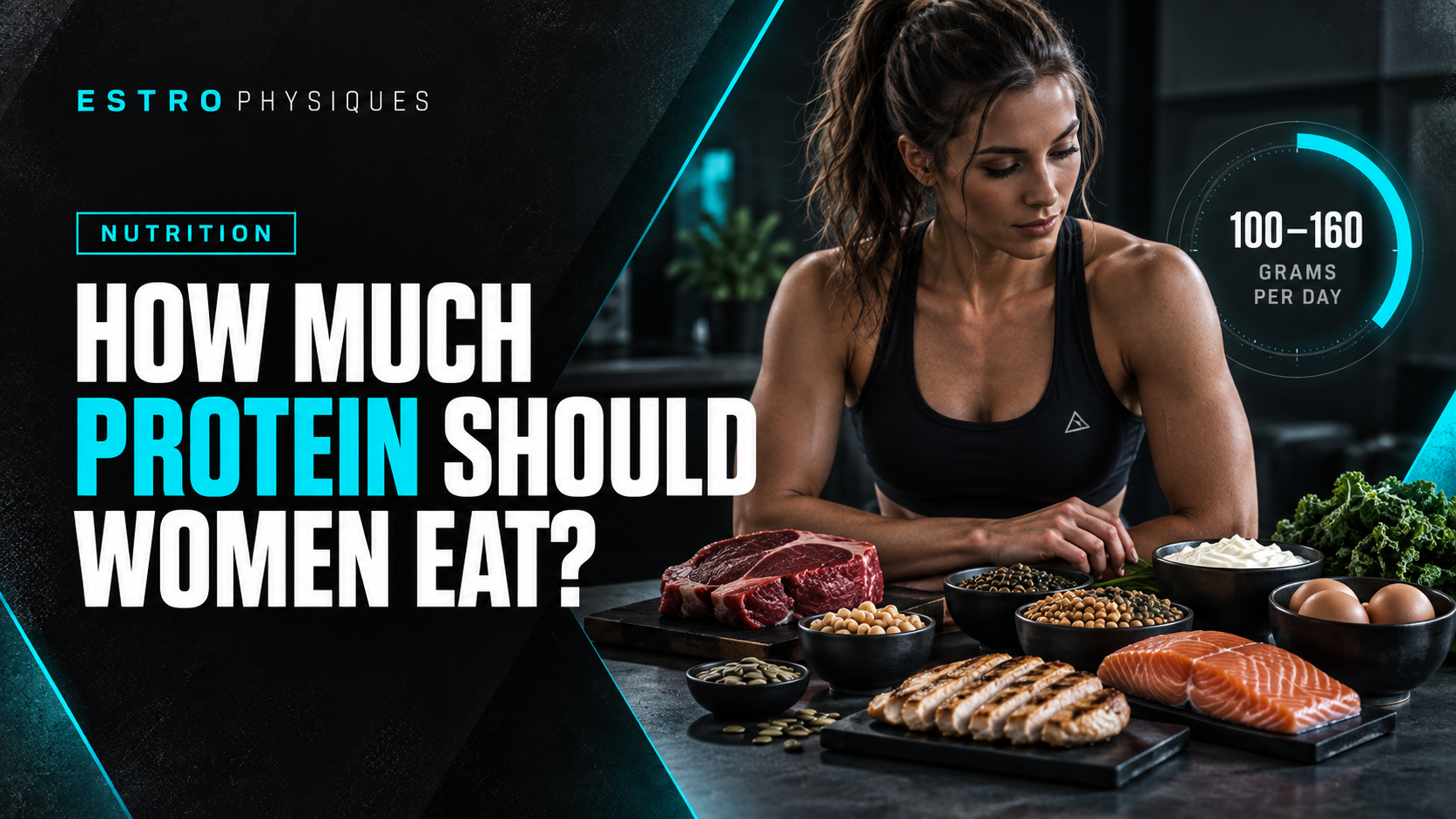
If you’re active and you want to build or keep muscle, a good daily target is 1.6 to 2.2 grams of protein per kilo of body weight.
So if you weigh 70 kg, that’s roughly 112 to 154 g of protein a day. If fat loss is your main goal, aim toward the higher end. It helps you hold onto muscle and stay full while you’re eating fewer kilojoules.
That’s well above the government “minimum” of around 0.8 g/kg, which is set to prevent deficiency, not to help you build a strong, lean body.
Why women need more protein than they think
Protein does a lot more than “build muscle”:
- It protects lean tissue while you’re dieting. When you cut food, your body can burn muscle for fuel. Enough protein tells it to hold onto your hard-earned muscle instead.
- It keeps you full. Protein is the most satiating macronutrient, so higher-protein meals cut cravings and mindless snacking.
- It helps you recover. After training, your muscles rebuild using the amino acids from your food.
- It matters more with age. As oestrogen drops around menopause, keeping muscle takes more deliberate effort, and protein is central to that.
Research indexed on PubMed shows that muscle building is driven strongly by how much quality protein you eat, with roughly 0.31 g/kg per meal maximising the muscle-building response after training (Moore, 2019). For a 70 kg woman that’s about 22 g of protein per meal as a practical minimum.
How to spread protein across the day
You’ll get better results spreading your protein out rather than saving it all for dinner. Aim for 25 to 40 g of protein at each main meal, plus a protein-rich snack or two.
A simple daily framework:
- Breakfast: eggs, Greek yoghurt, or a protein smoothie
- Lunch: chicken, tuna, tofu or legumes with your salad or wrap
- Dinner: a palm-sized serve of meat, fish or a plant protein
- Snacks: cottage cheese, edamame, a protein shake, or jerky
Easy high-protein foods
You don’t need supplements to hit your target, though a protein powder is a handy tool. Great whole-food options include:
- Chicken breast, turkey, lean beef, kangaroo
- Fish and seafood, like barramundi, salmon, prawns and tinned tuna
- Eggs and egg whites
- Greek yoghurt, cottage cheese, milk
- Tofu, tempeh, edamame, lentils and chickpeas
- Protein powder (whey or a plant blend)
Rough protein hits: a 100 g cooked chicken breast is about 30 g protein, three eggs about 18 g, 200 g Greek yoghurt about 20 g, and one scoop of protein powder about 25 g.
What about plant-based eaters?
You can absolutely meet your protein needs on a vegetarian or vegan diet. It just takes a little more planning. Plant proteins tend to be lower in the amino acid leucine, so aim toward the higher end of the range and combine sources (like legumes plus grains) across the day. Tofu, tempeh, edamame, lentils and a good plant protein powder make it very doable.
Common protein mistakes
- Skimping at breakfast. Toast and coffee leaves you protein-starved until lunch. Front-load it.
- Guessing portions. Most people overestimate how much protein they eat. Weigh your food for a week to train your eye.
- Fearing “too much” protein. For healthy women, high-protein eating is safe and well tolerated. There’s no need to worry unless you have a diagnosed kidney condition, in which case check with your doctor.
Frequently asked questions
Can eating too much protein be harmful? For healthy people, no. Intakes in the 1.6 to 2.2 g/kg range are safe and well studied. If you have kidney disease, check with your GP first.
Do I need protein powder? No, it’s a convenience, not a requirement. But a shake is one of the easiest ways to top up your daily total.
Will protein make me bulky? No. Protein supports the muscle you build through training. It doesn’t magically add size. Building noticeable muscle as a woman is slow and intentional.
Make your nutrition simple
Nailing your protein is the highest-value nutrition habit you can build, and it’s the first thing we set up with our coaching clients. If you’d like a target and a plan built around your body and goals, we’d love to help, whether you’re in Townsville or training online from anywhere in Australia.
References (via PubMed): Moore DR. Maximizing Post-exercise Anabolism: The Case for Relative Protein Intakes. Front Nutr. 2019. DOI.